



What’s new
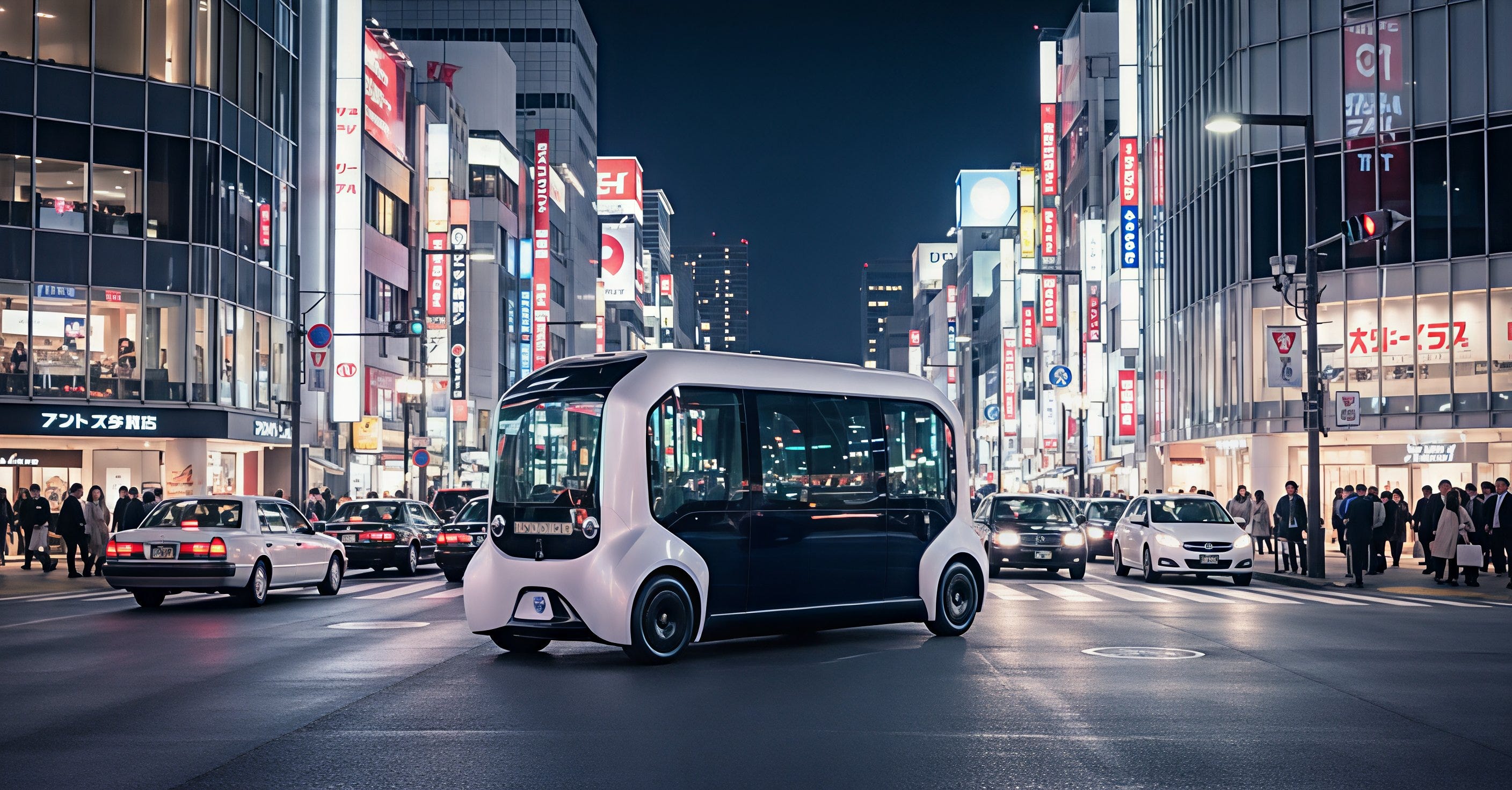
Toyota, Nissan, and SoftBank have finally joined the global push toward fully autonomous driving. Toyota unveiled its first Level 41 ready electric vehicle (EV), the e-Palette, and formed a strategic partnership with Waymo. Nissan is testing AI-driven cars in Ginza using U.K. based Wayve AI Driver software and next-generation LiDAR. SoftBank supports Wayve, an AI company that offers ultra-low-cost, map-free automation.
Why it matters
After years of cautious testing in rural areas, Japan’s automotive giants have come to an uncomfortable realization: the future of AI-driven mobility will be shaped in Tokyo, not the countryside. The company that controls Japan’s urban data will dominate the next era of mobility economics.
Context
Japan once dominated the global auto market with its expertise in combustion and hybrid engineering. However, the rise of software-defined vehicles (SDVs) has reversed that advantage — now, software, not hardware, determines value. For Toyota and its competitors, survival means transforming from manufacturers into mobility data companies.
By the numbers
29 million yen (US $190,000): Base price of Toyota’s e-Palette EV (half subsidized).
FY 2027: Target date for Toyota and Nissan to reach Level 4 autonomy.
250,000+ trips/week: Waymo’s ride-hailing volume in U.S. cities.
150,000 yen (~$1,000): Cost of SoftBank-backed Wayve’s camera-AI kit vs. LiDAR units costing tens of thousands of US dollars.
81%: Crash-injury reduction in Waymo’s U.S. operations.
Friction point
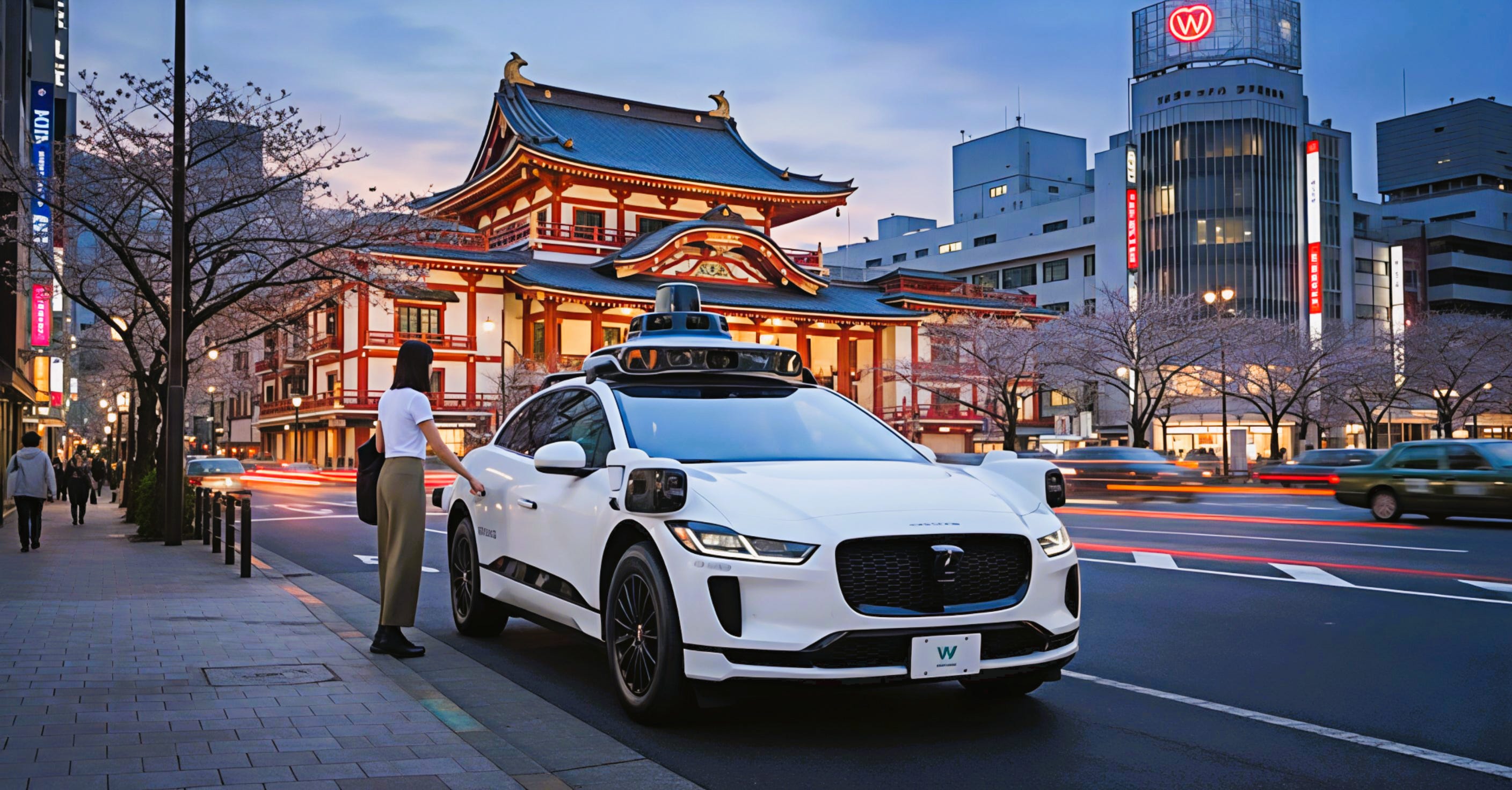
Japan’s safety-first approach of testing in rural areas before scaling slowed the accumulation of the complex data essential for AI learning. In contrast, Waymo and Tesla started in chaotic urban environments, feeding millions of real-world scenarios into their algorithms.
Follow the money
Toyota’s alliance with Waymo is an admission that collaboration beats competition in the AI era. Waymo gains brand recognition and access to a fleet, while Toyota gets world-class software and a shortcut to ride-hailing infrastructure. The prize? Control over Tokyo’s mobility economy, a densely packed market with significant traffic and profit potential.
Commentary
This marks Japan’s shift from hardware dominance to software modesty. The key question isn’t whether Toyota and Nissan can build a better robotaxi; rather, it’s whether they can integrate one more quickly than their foreign rivals can localize theirs.
After relocating from central Tokyo to Kyushu, Japan’s southernmost main island, approximately six years ago, I am a little concerned about how this evolution in thinking will likely mean that Japan’s countryside will receive the new autonomous driving technology last. Initially, I had hoped rural areas would benefit sooner through testing. It seems as though early testing in the countryside simply did not provide enough data. See “World’s Longest Public Road Test of a Self-Driving Vehicle Now Underway in Japan: The test features the Macnica EVO, an electric microbus that shuttles passengers between a bullet train station and 3 hot spring resorts in rural Japan” for more details.
However, the pace of technological advancement is accelerating. Thus, by the time I need to rely exclusively on self-driving vehicles, probably in about 25 years, autonomous vehicles will be driving throughout the entire country. Hopefully, all the kinks will be worked out by that point.
Reality check
Although Toyota has ambitious plans for Level 4 technology, its initial e-Palette deployments in Odaiba and Woven City are limited to fixed routes and controlled environments. In contrast, Waymo’s fleet is already navigating Tokyo traffic autonomously.
The big picture
Autonomous driving is no longer just a tech arms race—it’s also a contest for data monopolies. Japan’s urban density makes it the perfect training ground, but foreign companies got there first. The company that dominates Tokyo’s streets will define who profits from mobility worldwide.

What’s next
Toyota and Nissan plan to release consumer-ready Level 4 vehicles by 2027. If they succeed, Japan could stage a comeback in the SDV era. Otherwise, expect a future where its roads run on foreign AI technology.
The bottom line
Japan’s automakers once conquered the world with their engines. Their next victory depends on algorithms and whether “Made in Japan” can also mean “Trained by AI.”
Links to Japanese Sources: https://www.sbbit.jp/article/st/173256, https://www.sbbit.jp/article/st/171080, https://toyotaconiq-pro.co.jp/activities/2424/, https://global.toyota/jp/newsroom/corporate/42703314.html, https://global.toyota/jp/newsroom/corporate/43305367.html, and https://global.nissannews.com/ja-JP/releases/250922-01-j.
#AutonomousDriving #WaymoJapan #ePalette #SoftwareDefinedVehicle #NissanProPILOTAI #SoftBankWayve #Level4Mobility #TokyoAutonomousTaxiMarket #自動運転 #ウェイモジャパン #ソフトウェアディファインドビークル #日産プロパイロットAI #ソフトバンクウェーブ #レベル4モビリティ #東京自動運転タクシー市場 #RealGaijin #リアル外人
Please note that you can subscribe to Real Gaijin for free. If you are so inclined, you can also purchase an annual subscription for a relatively small fee.
However, I understand that even the lowest level of annual subscription allowed by Substack may seem too high for many. If you just want to buy a coffee (or maybe a matcha latte) for Real Gaijin, you can also make a small donation here:

https://buymeacoffee.com/realgaijin
In addition to offering a way to make a one-time, small donation equivalent to the price of a cup of coffee, Buy Me Coffee now supports recurring donations. Real Gaijin has three levels, including the following:

Pine or sho (松) in Japanese (gold level) for US$10/month

Bamboo or chiku (竹) in Japanese (silver level) for $5/month (same as a regular subscription via Substack)

Plum or bai (梅) in Japanese (bronze level) for only US $1/month
In Japanese, shō-chiku-bai (松竹梅) literally means “pine–bamboo–plum.” As is often the case for course meals in certain restaurants, on sake menus, or box lunch bento sets, shō-chiku-bai is often used instead of “gold–silver–bronze.”
For readers with some knowledge of Japanese, yes, the word for “pine” is “matsu.” In this case, however, the on-yomi (音読み) is used. Similarly, the word for bamboo is “take,” but the on-yomi is “chiku.” Similarly, the word for plum is “ume,” but the on-yomi is “bai.”
No Need to Pay Me: All levels of support - including just liking a particular article and/or leaving a comment - are very welcome. Thanks again for reading.
While Real Gaijin lives in Substack, you can also find Real Gaijin on a few other platforms (listed in alphabetical order).

https://www.instagram.com/real_gaijin_on_substack/

https://www.threads.net/@real_gaijin_on_substack

https://www.tiktok.com/@real.gaijin


https://www.youtube.com/@RealGaijin

https://www.linkedin.com/in/mark-kennedy-5b50b71/
Level 4 autonomous driving means a vehicle can drive itself without human input within specific, pre-mapped areas—such as certain city zones or shuttle routes. Unlike Level 3, which still requires a human to take over when requested, Level 4 systems can handle all driving tasks on their own and will safely stop or pull over if conditions fall outside their capabilities. In other words, it’s true self-driving—but only within defined limits. Examples include robotaxis like Waymo’s fleet in Phoenix or Toyota’s e-Palette shuttles operating in controlled environments.
Japan needs this most in the countryside, where public transport is limited or nonexistent, and the population is aging rapidly...
I'm excited by what's possible with self-driving cars in Japan.